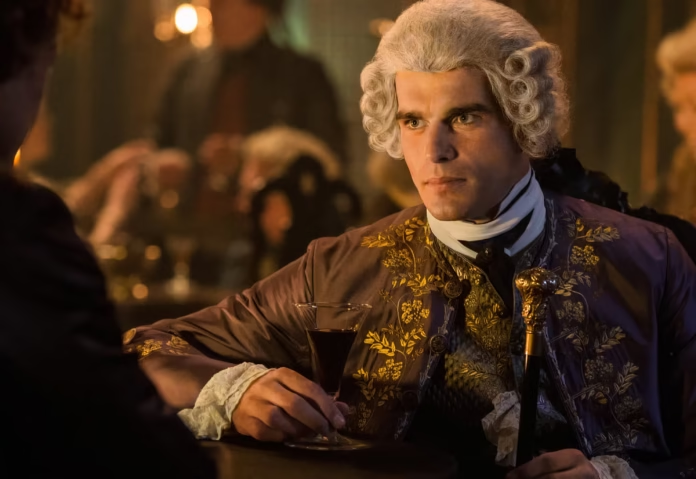
Season 2 of STARZ’s historical drama Outlander introduces one of its most memorable historical antagonists: the Count of St. Germain. Portrayed by actor Stanley Weber, the French noble enters the narrative in Paris when Claire Fraser (Caitríona Balfe) uses her modern medical knowledge to identify a smallpox outbreak on his incoming merchant vessel. To prevent an epidemic, French authorities burn the ship and its cargo, instantly sparking St. Germain’s enduring vendetta against Claire and Jamie Fraser (Sam Heughan). While the television series presents him as a power-hungry, scheming rival who eventually falls victim to poison, the real-life historical figure behind the character boasts a biography steeped in mystery, alchemy, and enduring folklore.
The Historical Figure in 18th-Century Europe
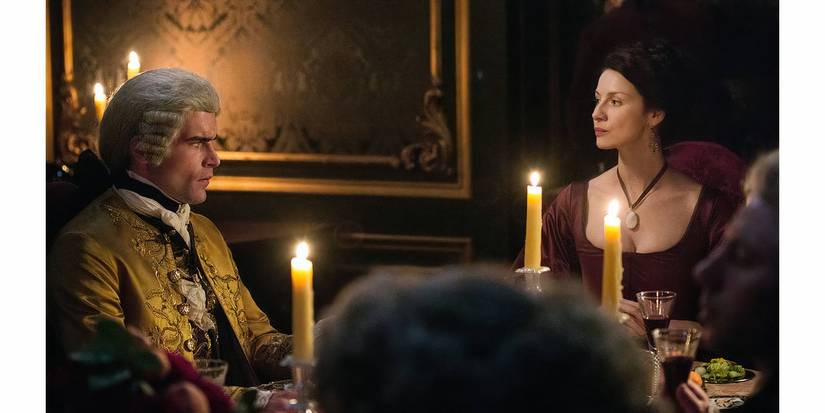
The real Comte de Saint-Germain was an actual figure in the court of King Louis XV, arriving in France during the 1740s much as depicted in the show. However, rather than operating primarily as a wine merchant, the historical St. Germain was widely celebrated across European high society as a polymath, diplomat, scientist, and accomplished musician.
-
Obscure Origins: St. Germain’s true lineage remains debated by historians. Near the end of his life, he claimed to be the son of Francis II Rákóczi, Prince of Transylvania. Many scholars suggest his ancestry was intentionally obscured to protect him from political targeting by the Habsburg Dynasty.
-
Pseudonyms and Studies: Throughout his life, St. Germain frequently adopted different aliases—including Claude Louis and Robert François Quesnay—to travel and pursue new fields of study. He was educated at the University of Siena under the patronage of Gian Gastone, the Grand Duke of Tuscany, and contributed significantly to early chemical and alchemical research.
-
Literary and Musical Legacy: St. Germain composed music and wrote literary texts, most notably The Most Holy Trinosophia, an obscure volume detailing esoteric and alchemical philosophy.
While Outlander dramatizes his death via poison during a courtly witchcraft trial arranged by Master Raymond, historical records indicate that Saint-Germain died in Germany around 1784, leaving behind few personal possessions beyond clothing, toiletries, and paid receipts.
The Supernatural Folklore and Vampire Legend
Because St. Germain’s birth, source of wealth, and exact death details were wrapped in secrecy, a vast body of urban legend developed around his persona following his death.
During the 19th and 20th centuries, rumors spread among occultists and folklore enthusiasts that St. Germain possessed the elixir of life and achieved immortality. In 19th-century New Orleans, a mysterious figure named Jacques St. Germain emerged, hosting lavish dinner parties where he reportedly refrained from eating solid food. Local legends eventually linked him to vampire folklore, alleging that he fled the city after an assault incident left behind evidence of blood consumption.
This supernatural reputation has inspired modern pop culture beyond Outlander. Novelist Anne Rice drew heavy inspiration from the St. Germain mythos when creating the vampire Lestat de Lioncourt for The Vampire Chronicles, and references to his legacy appear across television series like The Originals.
By blending documented 18th-century court history with the dramatic tropes of time travel and political conspiracy, Outlander transforms the enigmatic historical figure into a compelling narrative foil for Jamie and Claire Fraser.
Source: Compiled from various sources