Prince Harry is sharing a deeply personal account of his mental health struggles, revealing that he fell into depression shortly after moving to Canada with Meghan Markle and their young son, Prince Archie, in late 2019.
In a new MasterClass released on October 8, the Duke of Sussex, 42, recalls experiencing what he calls an “adrenaline crash” just days after leaving behind an environment he describes as stressful.
“Being in Canada, away from the stressful environment where presumably my body was just pumped full of adrenaline, within two or three days, I experienced this adrenaline crash, something that I’d never experienced before,” Harry explains.

He says the sudden change left him struggling to manage everyday tasks.
“It was as if I needed stress in order to get the adrenaline to make my brain function because I became useless around the house,” he recalls. “I actually slipped into depression for about two weeks and I felt like I couldn’t function without adrenaline.”
Harry and Meghan welcomed Archie in May 2019 and spent the end of that year in Canada with their infant son. In January 2020, they announced plans to step back as senior working members of the British royal family. Harry says their time away was intended to give them room to think.

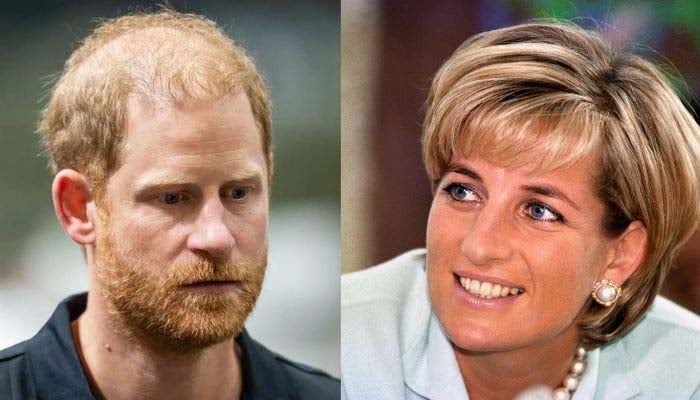
The revelation appears in Redefining Grief: Building Resilience Through Loss, a new MasterClass in which Harry speaks with neuroscientist Dr. Mary-Frances O’Connor about how grief affects the brain and body. Drawing on his own life, he discusses losing his mother, Princess Diana, in a Paris car crash in 1997 when he was just 12 years old.
MasterClass approached Harry about developing a class focused on grief last year. He filmed the program in California earlier this summer, and it was released ahead of World Mental Health Day on October 10. The project also supports two bereavement charities, Comfort Zone Camp and Scotty’s Little Soldiers, a cause Harry has supported for years.
“Grief is physiological as well as emotional, and what we know from research is that there are very common responses to the loss of someone important in our life,” O’Connor explains.
Harry says he spent many years struggling with the loss of Diana without fully understanding how deeply it affected him.
“For 15, 20 years, when I was being asked, ‘Are you okay?’ My response was, ‘I’m fine.’ It was numbness, emotional shutdown,” he says. “And without knowing it, adrenaline was pushing me, was driving me.”
He believes that constant need for adrenaline also influenced his decision to join the military at age 20.
“It was the driving force of what took me to joining the military at the age of 20. It was the perfect distraction. I couldn’t really think about much else apart from the task at hand,” Harry says.
After returning from his second tour in Afghanistan in 2013, Harry began to recognize that his military experiences appeared to have brought earlier trauma to the surface.
“The things that I saw, the things I experienced, appeared to be a trigger for other traumas that had stored themselves within me,” he explains.
Harry recalls experiencing panic attacks and feeling physically overwhelmed by everyday situations, including getting dressed for work.
“I started to realize that I probably had become seriously depleted when just putting a simple dress shirt on — the tightening of the collar — literally felt like I was suffocating, and I would be experiencing panic attacks just in the car on the way to work,” he says.
“And that’s when I realized, ‘Okay, there’s something bigger, there’s something else that you need to look into here.’”
During the conversation, O’Connor explains how long-term stress can affect the body. She compares the nervous system to parts of a car and cortisol, a hormone produced by the adrenal glands, to the vehicle’s fuel system.
“The thing is, if you are a lead foot on the gas pedal all the time, pushing all that gas through your body, it’s not sustainable,” she says.
O’Connor adds that chronic stress can affect how well people function, leaving them mentally foggy and physically exhausted.
“The brain fog is something that I can really relate to as well,” Harry responds.

The MasterClass also explores Harry’s difficulty accepting that his mother was gone. He admits that, even years after Diana’s death, part of him believed she might return.
“I believed that she had created this exit to get away from all the things that were destroying her life and that she was gonna reenter the fray in some disguise and then whisk me and my brother away,” he recalls.
O’Connor explains that the brain can continue to expect a loved one to return even after their death because the emotional bonds formed with that person do not simply disappear.
“When we bond with someone, when we fall in love with our spouse, or you fall in love with your baby, that’s actually encoded in the brain as a ‘we’ that says, ‘I will always be here for you, and you will always be here for me,’” she explains.
She adds that this can make grief feel confusing, as people may continue to long for someone they have lost.
“You’re not crazy,” O’Connor says, explaining that this response reflects the brain’s attachment to an important relationship.

For Harry, healing also meant confronting the guilt he felt about finding happiness after Diana’s death.
“I’d spent so long emotionally numb, to a large extent, because I felt disloyal and guilty for the possibility of being happy and joyful without her,” he shares. “I felt like I had to be sad and I had to be emotionally numb in order to prove to her that I missed her.”
Over time, however, Harry came to see his mother’s memory in a different way. He realized that being happy did not mean he was forgetting or betraying her.
“But the reality is, what I discovered was actually that she just wanted me to be happy. And that was a huge mental shift for me. It freed me, and it gave me a whole different outlook on life,” he says.
Today, Harry says his charitable work allows him to honor Diana and continue the causes that mattered to her.
“Everything I do, everything I put my energy towards, I hope that my mother will be proud about it,” he explains. “Trying to continue and protect her legacy, what I didn’t realize was the work that I ended up choosing, or the work that I ended up getting drawn in and attracted to, was so similar to the work that she was doing.”
Harry adds that grief remains a part of life, but it can also become a way of carrying a loved one’s memory forward.
“With grief comes this, it’s not so much responsibility, but this carrying of the person that you’ve lost throughout your life,” he says. “There is an element of carrying my mother in me that ultimately energizes me for the work that I do.”