If you thought you knew everything about the sprawling, time-bending universe of Outlander, think again. Even with eight seasons of epic romance, political betrayal, and historical drama behind us, the upcoming prequel series Outlander: Blood of My Blood is gearing up to flip the script on everything fans hold dear.
Filmed at the familiar Wardpark Film and Television Studios in Scotland—the very same stomping ground as the original series—this new chapter takes a deep dive into the 18th century, grounding itself primarily in 1714. But how does a prequel stand out when the ultimate fates of these iconic clans are already written in the history books?
Showrunner Matthew B. Roberts recently sat down to pull back the curtain on what makes Blood of My Blood a wildly different beast compared to its predecessor. From clever plot twists to a brand-new geographic focus, here is a closer look at how the prequel is reshaping the legend.
1. The Art of the “How”: Knowing the Outcome Is Half the Fun
One of the biggest hurdles for any prequel is the elephant in the room: the audience already knows where the characters end up. Whether it is the looming shadow of the Jacobite rising or the tragic weight of historical milestones like the Battle of Culloden, mystery can feel hard to come by.
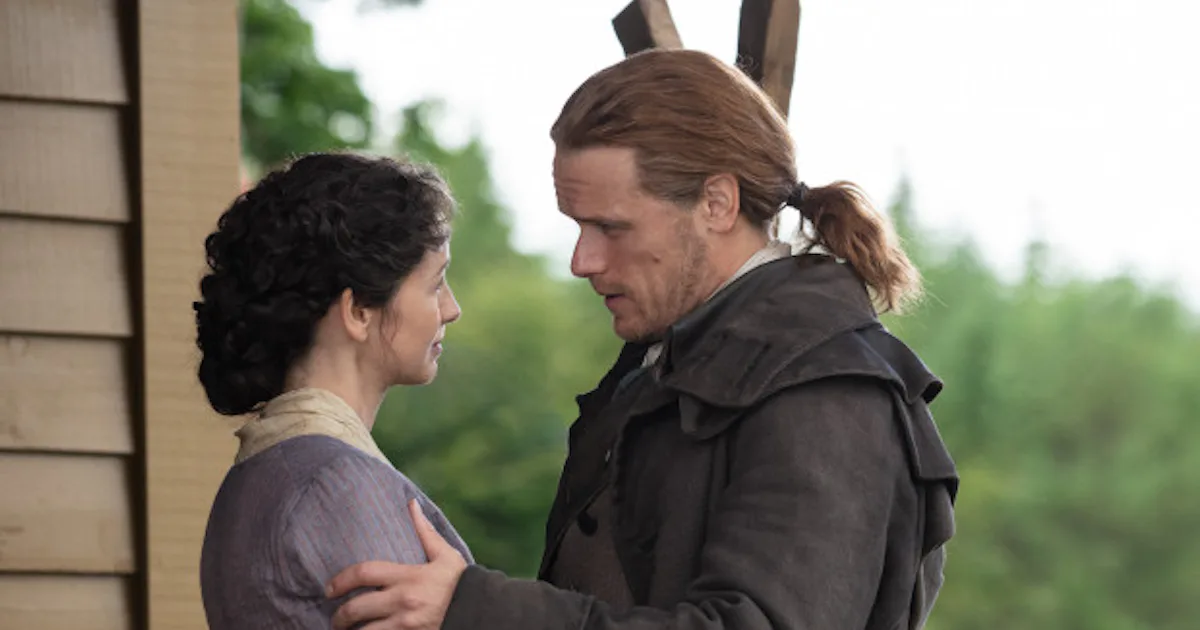
However, Roberts argues that knowing the destination doesn’t ruin the journey—it actually enhances it.
“I’ve suffered from that since the first day that Outlander started, which is everybody knows the outcome,” Roberts shared. “Everybody knows that certain things happen, certain people live, so we always have that. It’s the how that is the interesting part.”
Instead of relying solely on shocking plot armor, the writers’ room dug deep into the source material, looking at throwaway lines and hidden threads from the books. When a character casually mentions a past event, the creative team transforms it into an opportunity. Once audiences get past the initial world-building and exposition, the focus shifts entirely to character interactions, paving the way for organic surprises.
2. Twisting Canon: The Marriage No One Saw Coming
How do you keep fans on their toes when they think they know the canon? You reinvent the circumstances.
Take, for instance, the dramatic season one finale twist involving Dougal MacKenzie (played by Sam Retford) and Maura Grant (Bobby Rainsbury). Fans of the lore know that Dougal eventually marries Maura, but getting them to the altar was anything but a fairy tale.
Roberts and his team wanted to lean into the intense clan hatreds of the era. Knowing that Dougal openly detests the Grants, they engineered a high-stakes scenario: when his sister Ellen MacKenzie (Harriet Slater) abruptly flees from her arranged marriage to Malcolm Grant (Jhon Lumsden), the remaining siblings are thrust into a last-minute, forced union to salvage a fragile family alliance.

It is a brilliant subversion of expectations. Not only does it create immediate dramatic tension, but it also opens the door to building a surprisingly rich, dynamic romance out of sheer animosity.
3. Logistical Nightmares and Creative Freedom in the Highlands
Crafting compelling character dynamics in 18th-century Scotland isn’t as simple as dropping characters into a room together. The social and geographical realities of the Scottish Highlands present a massive logistical puzzle. Families are scattered across vast distances, meaning writers have to carefully plot out travel and encounters to make sure character reunions feel earned rather than forced.
At the same time, the writers must walk a tightrope when expanding on mysterious figures like Claire’s parents, Henry and Julia Beauchamp (portrayed by Jeremy Irvine and Hermione Corfield). While having a blank canvas sounds liberating, Roberts warns that too much freedom can break the broader narrative timeline.

Comparing Henry and Julia’s storyline to the beloved character Murtagh, Roberts noted the constant caution required: “When you put them in a story, oddly enough, it’s very similar to Murtagh, because Murtagh lived in our story and he dies in the books. Everything he touches after he lives, you go, ‘Is this, are we blowing anything, should he be around? What’s the trickle-down effect of it?'”
4. A Grounded Scope: Trading Continents for Pure Scottish Glory
Perhaps the most defining structural difference between the original series and its prequel lies in the sheer scale of the map.
While Outlander famously dragged Claire (Caitriona Balfe) and Jamie (Sam Heughan) across continents, oceans, and decades in a whirlwind global romance, Blood of My Blood keeps its boots firmly planted on Scottish soil.

Set entirely in Scotland, the prequel gives Roberts and his production team a tighter, more controlled narrative playground. Season one was specifically designed to showcase Scotland “in all its glory,” while simultaneously allowing the writers to examine the intricate, closed-loop family dynamics of the Fraser and MacKenzie clans with a microscope. With less ground to cover geographically, the series goes deeper psychologically—promising an entirely fresh flavor of drama for fans craving more historical immersion.
As the Fraser and MacKenzie legacies continue to unfold, Blood of My Blood proves that you don’t need to travel through time or space to deliver a breathtaking story; sometimes, looking backward is the boldest step forward you can take.
Source: Compiled from various sources