
Netflix’s new adaptation of John Steinbeck’s East of Eden is tackling one of America’s most ambitious literary stories, but not everyone is convinced the sprawling family saga has successfully made the journey from page to screen.
The limited series stars Florence Pugh as Cathy Ames, alongside Mike Faist and Christopher Abbott as brothers Charles and Adam. With a story stretching across generations and decades of American history, the adaptation has plenty of material to work with.
Yet one review has taken particular aim at the series’ acting and tone, arguing that its attempt to give Steinbeck’s writing the weight of “Great American Literature” leaves the drama feeling overly stiff and self-conscious.
A Steinbeck Classic Gets the Netflix Treatment
East of Eden is one of Steinbeck’s best-known novels, although it is often overshadowed by The Grapes of Wrath among readers and students.
The novel covers a vast period, beginning in the aftermath of the American Civil War and eventually reaching the country’s entry into World War I. At its center is a complicated family story involving brothers, rivalry, resentment, morality and inherited behavior.
The new adaptation is also part of a remarkable Hollywood connection.
The classic film version was directed by Elia Kazan, while this new adaptation comes from his granddaughter, Zoe Kazan. The connection gives the project an unusual family link stretching across generations of filmmaking.
Florence Pugh Plays the Dangerous Cathy Ames
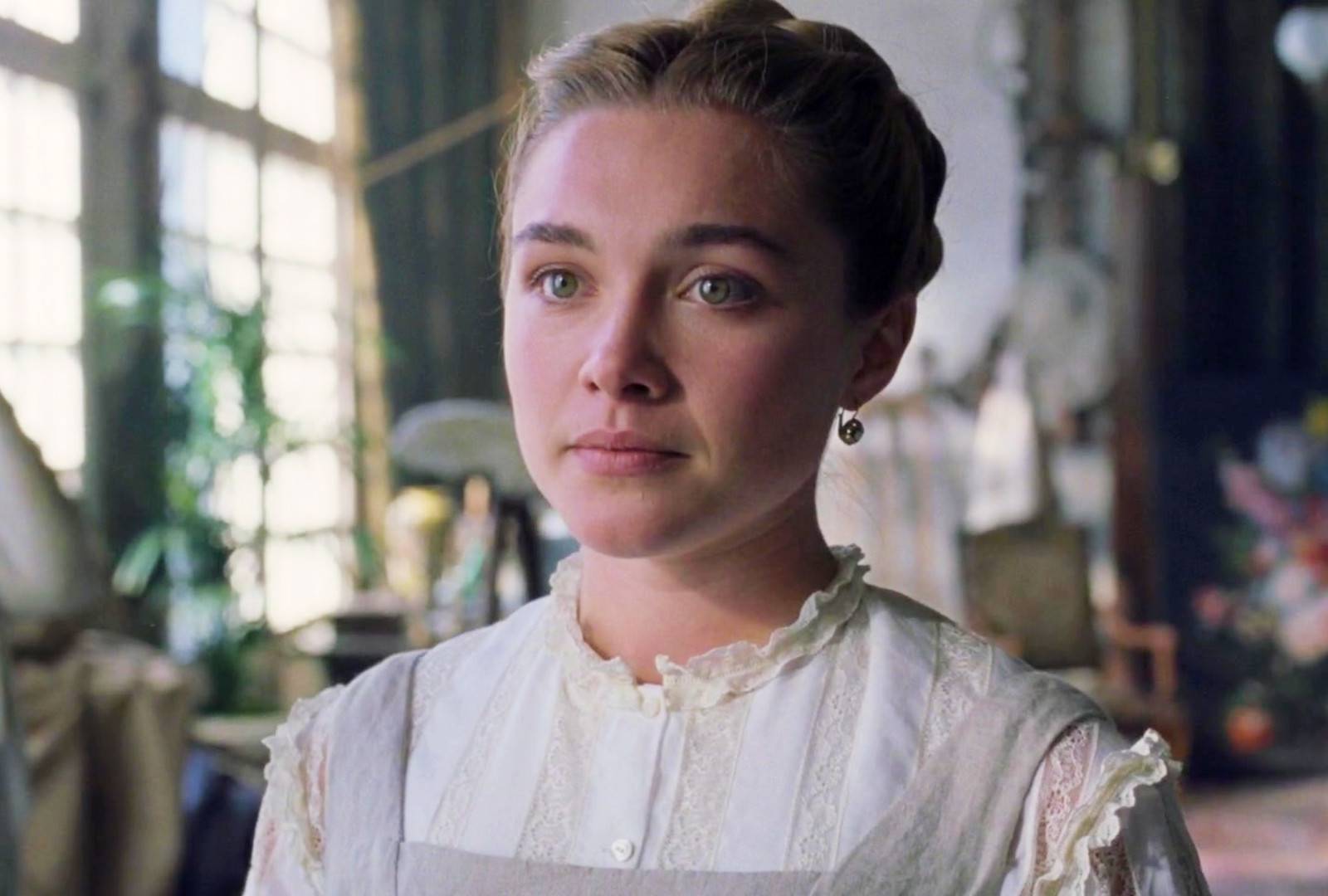
Florence Pugh takes on the role of Cathy Ames, one of the story’s most morally complicated characters.
Cathy makes a striking entrance. The series opens with her crawling across a ploughed field in a bloodstained smock before reaching a wooden porch and grabbing toward an empty rocking chair.

The dramatic sequence introduces Cathy as a disruptive force who will eventually come between brothers Charles and Adam.
Pugh’s performance immediately establishes Cathy as an unsettling presence. Even while apparently barely conscious in the opening scene, her subtle physical movements hint that there is considerably more happening beneath the surface.
However, according to the review, Cathy then largely disappears from the story for a while, meaning viewers have to wait before she becomes the central force the opening suggests she will be.
The Story Begins With Two Bitter Brothers
Mike Faist and Christopher Abbott play Charles and Adam, the brothers whose lives have been shaped by their difficult relationship with their father and their very different experiences.
Charles has spent years working on the family farm while resenting the life it represents. Adam, meanwhile, spent a decade serving as a U.S. cavalryman.
Both brothers carry resentment toward their father, a war veteran whose influence continues to shape their lives. At the same time, the story suggests that they have inherited some of his harsher qualities.
Their relationship provides much of the foundation for the family conflict that follows.
Why the Series Has Divided Critics
The biggest criticism in the review is not directed at the scale of the story, but at the way the adaptation presents it.
The reviewer argues that the performances are often excessively restrained and formal, with dialogue delivered in a deliberately serious manner that can make the characters sound as though they are reciting literature rather than living through the drama.
That approach is particularly noticeable in the early episodes, where the series leans heavily into its period setting and literary source material.
The result, according to the review, is a show that sometimes feels more concerned with appearing weighty and important than allowing its characters to breathe naturally.
A Very Different Approach From James Dean’s Film

The new series also has an advantage—and a challenge—that the famous 1955 adaptation did not.
Elia Kazan’s film, starring James Dean, famously focused on the latter portion of Steinbeck’s story rather than attempting to adapt the entire novel.
The Netflix series, by contrast, has the time and space to explore the story’s much broader timeline, beginning decades earlier.
That means viewers are required to spend considerably more time with the family and its history before reaching the dramatic material that audiences may already associate with the James Dean film.
Whether that expanded approach ultimately pays off remains a matter of taste, but the adaptation is clearly attempting something far more expansive than the earlier movie.
For viewers drawn to Steinbeck’s themes of family, fate and moral conflict, East of Eden offers a much fuller journey through the novel. For others, the deliberate performances and intensely literary tone may make that journey feel considerably longer than necessary.
Source: Compiled from various sources


