Netflix’s Monster: The Lizzie Borden Story puts its own definitive spin on one of America’s most notorious unsolved murders. But while Ryan Murphy and Ian Brennan’s series presents a clear version of events, the historical record is far less certain.
The series stars Ella Beatty as Lizzie Borden, the Massachusetts woman accused of murdering her father, Andrew Borden, and stepmother, Abby Borden, inside their Fall River home on August 4, 1892.
Lizzie was arrested, tried and acquitted in 1893. No one else was ever convicted of the killings, leaving the case officially unsolved.
Monster, however, makes a much more decisive choice. It portrays Lizzie as the killer and builds an elaborate story around her, including a secret relationship with the family maid Bridget “Maggie” Sullivan, a murder conspiracy and an abusive family environment.
Beatty has acknowledged that the series presents a “very fictionalized version” of Lizzie, drawing from historical material while creating a dramatized interpretation of her life.
So, which parts of Monster are rooted in history, and which were created for the series?
Did Lizzie Kill Her Father And Stepmother?
Verdict: Unknown
Andrew and Abby Borden were unquestionably murdered inside their home at 92 Second Street in Fall River, Massachusetts, on August 4, 1892.
Abby was killed upstairs earlier that morning. Andrew later returned home and was found brutally murdered on a sofa downstairs.
Lizzie became the main suspect and was arrested a week later. She eventually stood trial and, on June 20, 1893, a jury acquitted her.

The prosecution had no eyewitness, no confession and a largely circumstantial case. Some potentially damaging evidence was also kept out of the trial, including evidence concerning an alleged attempt by Lizzie to obtain poison before the murders.
More than 130 years later, there is still no conclusive evidence establishing who killed Andrew and Abby.
Netflix chooses one answer. History does not.
Were Lizzie Borden And Bridget Sullivan Lovers?
Verdict: Fiction — or, at minimum, completely unproven
Vicky Krieps portrays Bridget Sullivan as far more than the Borden family’s maid. In Monster, Bridget and Lizzie develop a sexual relationship that eventually becomes part of a conspiracy to murder the Bordens.
The real Bridget Sullivan certainly existed and was inside the Borden home on the morning of the killings. She also became an important witness in the investigation.
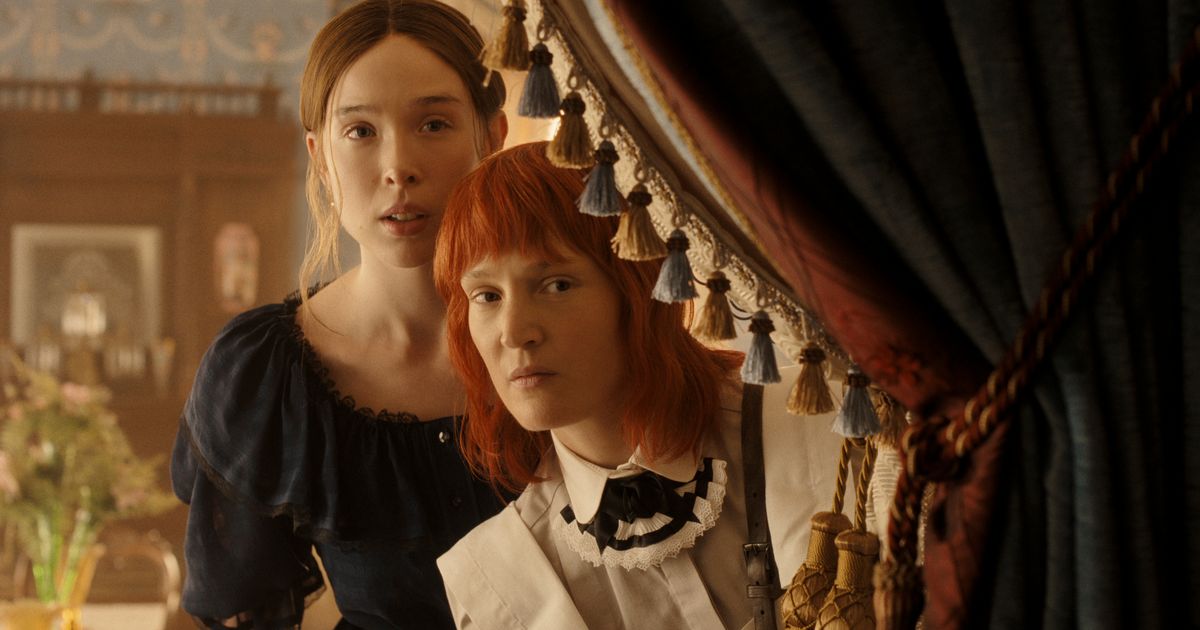
But there is no historical evidence establishing that she and Lizzie were lovers or that Bridget participated in the murders.
Historian and Lizzie Borden author Cara Robertson has traced the idea of a sexual relationship between the two women to later fictional portrayals of the case, including Evan Hunter’s 1984 novel Lizzie.
Sullivan said she had spent part of the morning washing windows before eventually going upstairs to rest. Monster transforms that detail into part of its fictional conspiracy.
Did Andrew Borden Abuse Lizzie?

Verdict: Unproven
The Netflix series depicts the Borden household as deeply abusive and dysfunctional, using that environment as part of its explanation for Lizzie’s actions.
There have long been theories that Andrew sexually abused one or both of his daughters. However, there is no reliable contemporary evidence establishing that he did.
What is documented is considerable tension within the family, including disagreements involving Andrew’s money and property and the increasingly strained relationship between Lizzie, her sister Emma and their stepmother.
The series turns those documented tensions into a much darker interpretation.
Did Lizzie Try To Poison Her Family?
Verdict: Partly true, with major dramatization
This storyline combines several historical details with fictional additions.
Members of the Borden household did become sick shortly before the murders. An employee at a local drugstore also later claimed that Lizzie had attempted to purchase prussic acid, a deadly poison, shortly before Andrew and Abby were killed.
The prosecution wanted to introduce evidence concerning the alleged poison purchase, but it was ultimately excluded from Lizzie’s trial.
Monster takes the story much further.
The series depicts Lizzie and Bridget deliberately serving Andrew and Abby spoiled oysters as part of an attempt to poison them. The resulting vomiting and diarrhea scene is entirely part of the show’s dramatization.
There is no established historical evidence that such a poisoning plot occurred.
Did Lizzie Burn A Dress After The Murders?
Verdict: True

One of the show’s more significant details is based on a documented event.
Several days after the murders, family friend Alice Russell witnessed Lizzie burning a dress in the kitchen stove.
Lizzie’s explanation was that the dress had been ruined by paint and was no longer useful. Given the timing, however, prosecutors viewed the incident with suspicion.
There was no proof that the dress was what the killer had worn or that it contained blood.
Monster takes the real incident and supplies its own interpretation of why Lizzie burned the dress.
Did Lizzie Murder Bertha Manchester?
Verdict: Fiction
Bertha Manchester was a real woman who was murdered, but the circumstances surrounding her death were dramatically altered for Monster.
The series moves Manchester’s murder in the timeline and presents it as a kind of test run for Lizzie and Bridget before the Borden killings.
That did not happen.
Manchester was murdered after Andrew and Abby Borden were killed and shortly before Lizzie’s trial began.
José Correa de Mello, a Portuguese immigrant, was convicted of Manchester’s murder, although that conviction was later determined to have been wrongful.
There is no established evidence connecting Lizzie Borden to Manchester’s death.
Did Actress Nance O’Neil Help Lizzie During Her Trial?
Verdict: Fiction — although their friendship was real
Nance O’Neil may appear to be a fictional addition designed for the series, but the actress was a real person who eventually became close to Lizzie.
Born Gertrude Lamson, O’Neil became a successful stage actress and developed a close relationship with Borden.
The problem is the timeline.
The two women apparently did not meet until around 1904, approximately 11 years after Lizzie’s acquittal. That means O’Neil could not have secretly coached Lizzie through her 1893 murder trial as portrayed in the series.
The show’s creators have acknowledged changing the timeline for dramatic purposes, including using O’Neil as a way to explore the difficulties of dramatizing the trial.
Whether their relationship was romantic or sexual is another unanswered question. Their friendship was close and attracted attention, but surviving evidence does not establish that they were lovers.
Were Andrew And Abby Borden’s Skulls Really Used In Court?
Verdict: True
One of the most disturbing details in Monster is also one of the most firmly rooted in the historical record.
The skulls of Andrew and Abby Borden were brought into Lizzie’s trial as evidence.
The victims’ heads had been removed during the investigation and their skulls cleaned for examination. When the remains were presented during the proceedings, Lizzie reportedly became physically overwhelmed.
The bizarre courtroom spectacle may seem like a modern true-crime invention, but the actual Borden trial contained its own share of extraordinary evidence.
Did Lizzie Get Acquitted Because Men Couldn’t Believe A Woman Could Commit Murder?
Verdict: More Complicated Than The Series Suggests
Gender was undoubtedly an important part of the trial.
Lizzie was an unmarried, churchgoing woman from a respectable New England family, and her defense had an obvious reason to emphasize her femininity and social position.
Monster takes that idea further by having Nance O’Neil coach Lizzie on how to present herself to the jury — something that did not happen.
But explaining the acquittal simply as Victorian men being unable to believe that a woman could commit murder leaves out major weaknesses in the prosecution’s case.
There was no eyewitness to either killing, no confession and no definitive murder weapon conclusively tying Lizzie to the crimes. The alleged poison evidence was excluded, as was Lizzie’s inquest testimony.
Ultimately, the jury had to determine whether the prosecution had proved Lizzie’s guilt beyond a reasonable doubt.
It did not.
The Real Lizzie Borden Remains A Mystery
This uncertainty may be the reason the Lizzie Borden case continues to fascinate audiences more than a century later.
Netflix gives viewers something the historical record never provided: a definitive explanation.
The series gives Lizzie motives, secrets, an alleged lover and an accomplice. It shows audiences its version of how the murders happened.
The real case is considerably less satisfying.
Lizzie lived in the house where her father and stepmother were brutally murdered. Her behavior raised suspicion. She was accused of attempting to obtain poison before the killings and was seen burning a dress afterward.
Yet none of those details conclusively established that she was the killer.
Lizzie left the courtroom a free woman and later moved into a larger Fall River home called Maplecroft. She lived for another 34 years and died on June 1, 1927, at the age of 66.
She never confessed.
No one else was ever convicted of murdering Andrew and Abby Borden.
And more than a century later, the central question remains unanswered: Who really killed the Bordens?
Source: Compiled from various sources