Nathan Fielder spent 34 days living inside Elizabeth Holmes’ world while filming You Can See Everything, and the experience left him with one particularly unsettling question: how much of what he was hearing could he actually believe?
Fielder and filmmaker Lance Oppenheim’s unconventional documentary about the disgraced Theranos founder screened Wednesday at the New York Film Festival, following its surprise premiere at the Telluride Film Festival and the strong reviews and Oscar speculation that followed.
The nearly three-hour film takes viewers into Holmes’ life shortly before she began serving an 11-year prison sentence for fraud. It also explores her family life with partner Billy Evans, producing a documentary filled with uncomfortable, unexpected and sometimes darkly funny moments.
‘She Seems So Genuine’ — But Fielder Knew the History
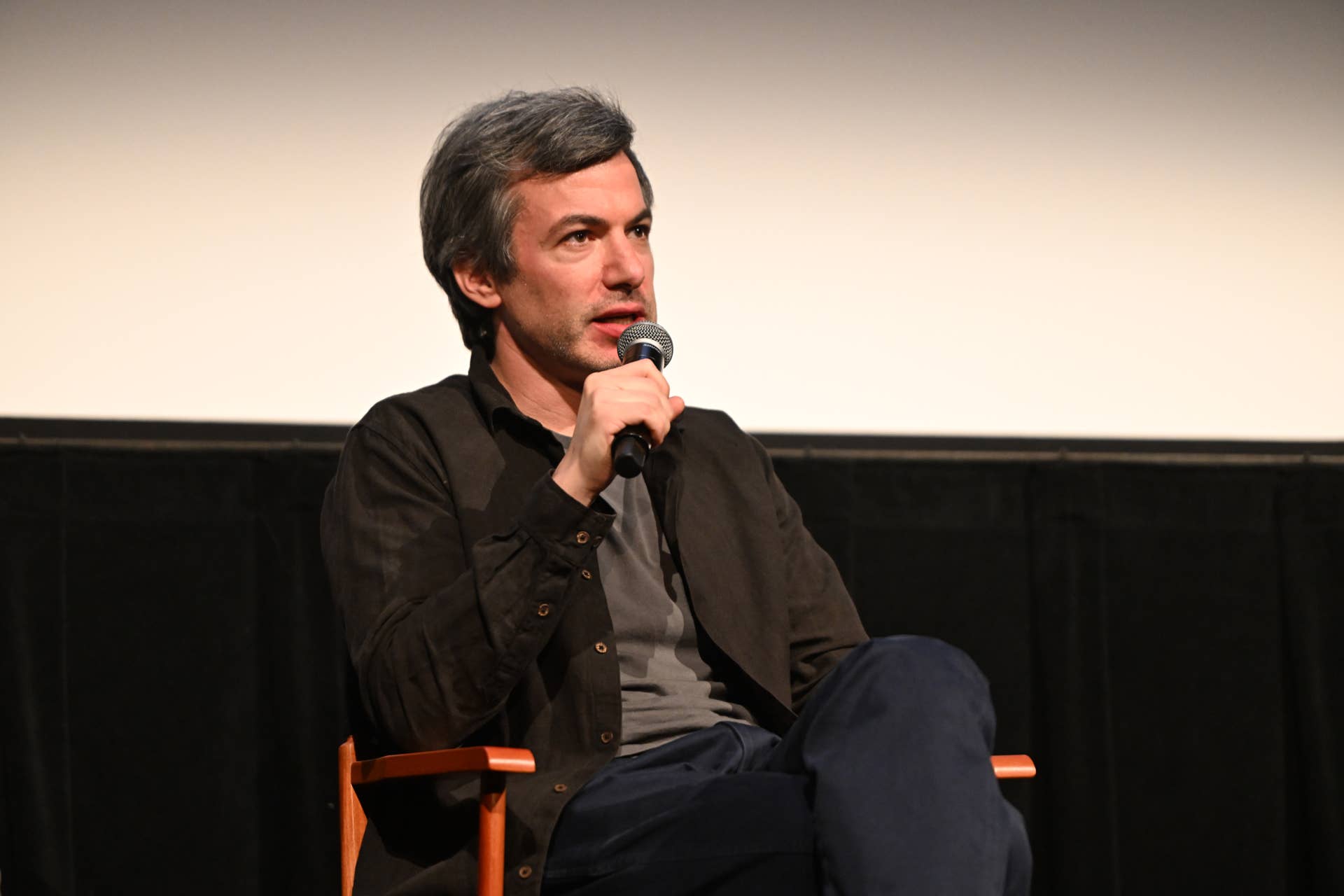
During a post-screening Q&A, Fielder described the strange psychological experience of spending time with Holmes while knowing the history surrounding Theranos.
“When I met her, I remember having this weird experience where she seems so genuine at times,” Fielder said. “But then I’m like, ‘no,’ and clocking and tracking my thoughts and being like, ‘Okay, I know she’s a liar.’”
That contradiction became central to the filmmakers’ approach.
Fielder first became interested in Holmes after reading Bad Blood: Secrets and Lies in a Silicon Valley Startup, the 2018 book about Theranos. Oppenheim later contacted Fielder after discovering that he had watched part of Oppenheim’s documentary Some Kind of Heaven.
The two eventually became friends and, after an unusual conversation involving a magician at the Magic Castle reminded Oppenheim of Holmes, they connected with her through A24.
Holmes and Evans ultimately agreed to allow Fielder and Oppenheim to film inside their home.
A24 also gave the filmmakers an unusual degree of flexibility, allowing the small crew to abandon the project if they could not find a compelling story.
The Filmmakers Couldn’t Agree on What They Were Seeing
Instead of making their uncertainty disappear, filming appeared to make it more pronounced.
Fielder explained that after certain moments happened on camera, he and Oppenheim would discuss what they had witnessed—and frequently reach completely different conclusions.
“We’d completely disagree on what something meant to us and what we thought was happening,” Fielder said.
Rather than seeing that disagreement as a problem, they began to view it as the documentary’s central mystery.
“If we can’t agree on what’s happening, there’s something here,” Fielder recalled thinking.
Oppenheim said the same uncertainty spread throughout the production team.
“Every person that worked on this movie was going through a similar feeling of cognitive dissonance,” he said.
According to Oppenheim, even seemingly ordinary moments could produce radically different interpretations among the people who witnessed them. That realization led the filmmakers to focus less on explaining Holmes and more on capturing the experience of being around her.

Nathan Fielder Actually Moved In
The documentary became even more unusual when Fielder moved into Holmes and Evans’ home and filmed alongside them around the clock.
The first teaser already attracted significant attention after showing Holmes telling Fielder that she had no reason to deceive him and was simply engaging with him as another human being.
The full trailer then revealed just how deeply Fielder had inserted himself into the household, including footage of him sitting on the couple’s bed and Holmes becoming emotional during an interview.
At the New York screening, Fielder admitted that the experience was difficult to describe.
“I cannot tell you how weird it was that we were there,” he said, prompting laughter from the audience.
He also joked that he would not necessarily have expected Holmes to choose him as the person to document such a significant period of her life.
“I’m a nice person, I do believe, but I’m not the most comforting,” Fielder said.

Why Did Holmes Choose Fielder?
One question Fielder could not answer was why Holmes and Evans were willing to give him such extraordinary access.
According to Fielder, Holmes told him that they viewed the project primarily as a human story.
But beyond that explanation, he acknowledged that he could only speculate about their motivations.
Perhaps, he suggested, they believed that inviting someone they regarded as a friend would result in a documentary that might not be taken seriously. Still, Fielder emphasized how difficult it was to know what they were thinking.
Oppenheim compared the strange atmosphere of the production to Stalker, Andrei Tarkovsky’s 1979 science-fiction film in which a mysterious zone is said to fulfill people’s deepest desires.
For Oppenheim, the comparison captured the sensation of entering Holmes’ world and suddenly finding that the assumptions the filmmakers brought with them no longer seemed reliable.
He said their “brains were scrambled” and admitted that they spent a long time wondering whether they had actually captured a worthwhile film.
Fielder Makes His Feature Directing Debut
You Can See Everything represents another unusual step in Fielder’s career.
After gaining recognition with Nathan for You, he pushed further into the space between reality and performance with HBO’s The Rehearsal. He later created, wrote, directed and starred in Showtime’s The Curse.
The Holmes documentary marks his feature directorial debut.
Oppenheim has also built a reputation for documentaries centered on unusual communities and personalities. His previous projects include Some Kind of Heaven, Ren Faire and Spermworld.
His latest film, Primetime, was released the previous week and stars Robert Pattinson as To Catch a Predator host Chris Hansen.
Audiences Will Have to Wait for the Full Story
The New York Film Festival screening reportedly prompted laughter, gasps and plenty of uncomfortable reactions as the documentary moved through its unexpected turns.
Afterward, Fielder and Oppenheim asked viewers to avoid revealing the film’s surprises and twists.
For audiences who want to experience the unusual dynamic between Fielder, Holmes and Evans without knowing what comes next, the wait will continue a little longer.
You Can See Everything is scheduled to arrive in theaters on October 16.
Source: Compiled from various sources