Despite becoming a major television phenomenon, Yellowstone left behind a surprising number of storylines that never received the payoff viewers might have expected. Across its five seasons, creator Taylor Sheridan introduced everything from assassination attempts and mysterious visions to dinosaur fossils and potential legal scandals, only for several of those threads to fade away.
The series delivered plenty of memorable twists, but some of its biggest setups ultimately led nowhere. Here are 12 Yellowstone storylines that raised intriguing questions but never developed into the major arcs they initially appeared to promise.
1. The Dutton Family Assassination Attempt

The Season 3 finale delivered one of Yellowstone‘s most shocking cliffhangers when John Dutton was shot, a bomb exploded in Beth Dutton’s office, and armed attackers targeted Kayce Dutton at his workplace.
Naturally, viewers expected Season 4 to explore who was behind the coordinated attacks and how the Duttons would respond. Instead, the aftermath moved relatively quickly. John recovered, Beth appeared to carry on without much visible disruption, and Kayce soon returned to his usual routine.
The investigation eventually pointed toward Garrett Randall, Jamie’s biological father, while Rip killed Roarke Morris using a snake hidden in a cooler. After Beth forced Jamie to kill Garrett, the larger assassination storyline largely disappeared, leaving some of its most compelling questions without the detailed answers viewers had anticipated.
2. Thomas Rainwater’s Fight to Reclaim the Land

Thomas Rainwater, played by Gil Birmingham, initially stood out as one of the Dutton family’s most significant opponents. His ambition to reclaim land for his people through the money generated by his casinos offered a compelling conflict rooted in ownership, history and competing ideas of justice.
However, Rainwater gradually became less of a direct threat to the Duttons. By Season 3, he had formed an alliance with John, and his original mission received less attention.
Although Rainwater ultimately achieved a victory, the storyline did not fully explore the larger struggle over who had the strongest claim to the land. A conflict that once challenged the Duttons’ position became a less prominent part of the series.
3. Kayce’s Mysterious Vision Quest

In Season 4, Kayce undertook a vision quest connected to Broken Rock traditions, leading to a series of unusual experiences that seemed destined to shape his future.
During the journey, he saw a wolf and visions involving two possible futures: one with his wife, Monica, played by Kelsey Asbille, and another involving Avery, portrayed by Tanaya Beatty. When Kayce returned, he told Monica that he had seen the end of their relationship.
The ominous statement suggested that his visions would have lasting consequences. Instead, Kayce stayed with Monica, Avery’s role faded, and the wolf imagery never developed into a clear, sustained storyline.
With Monica’s death occurring before the events of Marshals, the meaning of Kayce’s vision remains an especially intriguing subject for viewers looking back at the original series.
4. The Dinosaur Bones Discovered on the Ranch
When Kayce and his son, Tate, played by Brecken Merrill, discovered dinosaur bones on the ranch, the find seemed to open up a potentially fascinating new conflict.
The fossils represented a history far older than the Dutton family and could have introduced questions about land ownership, scientific research and the potential value of the discovery. But after the bones were stolen, the story essentially ended.
Neither the theft nor the possibility of finding additional fossils received meaningful follow-up. For a series so heavily concerned with the significance and control of land, the abandoned discovery felt like a missed opportunity.
5. Garrett Randall’s Potential as a Major Antagonist
Garrett Randall, played by Will Patton, initially appeared to be a potentially formidable enemy for the Duttons. His involvement in the assassination plot suggested that he could become a central figure in the family’s increasingly dangerous conflicts.
His relationship with Jamie Dutton, portrayed by Wes Bentley, also offered opportunities to explore Jamie’s divided loyalties and complicated family history.
Instead, Garrett was killed by Jamie before his character could fully develop as a major antagonist. His limited interactions with John left several questions about their relationship unexplored, while his death primarily served to intensify the conflict between Jamie and Beth.
6. Tate’s Trauma After His Abduction
Tate’s kidnapping by the Beck brothers in Season 2 had serious emotional consequences. After the ordeal, he became withdrawn, hid under his bed and struggled to separate himself from Monica.
The storyline briefly acknowledged the lasting effects of such a frightening experience on a child growing up in the Dutton family’s violent world. It also offered an opportunity to change the way Kayce and Monica approached parenting and to challenge John’s relentless fight to protect the ranch.
However, Tate appeared to recover relatively quickly, with few lasting consequences explored in the larger narrative. His experience could have become a deeper examination of trauma and its impact on the family, but the series soon moved on.
7. Kayce’s Unused Plane Bomb
During the conflict with the Beck brothers, Kayce planted a remotely activated bomb on their plane, seemingly preparing for a decisive confrontation.
The plot became particularly confusing when the brothers kidnapped Tate and the story shifted toward rescuing him. After the Becks were dealt with, the bomb was never meaningfully revisited.
The device could have created further complications, especially if another person had boarded the plane or if its presence had attracted unwanted attention to the Duttons. Instead, an explosive setup that appeared to promise a major development simply vanished from the story.
8. Jimmy’s Move to the Four Sixes Ranch
Jimmy Hurdstrom, played by Jefferson White, underwent a significant transformation during his time on Yellowstone, evolving from an inexperienced ranch hand into someone increasingly comfortable with cowboy life.
Season 4 sent him to the 6666 Ranch in Texas, where he pursued new opportunities and developed a relationship with Emily. After returning to Montana and reconnecting with his former girlfriend, Mia, Jimmy ultimately chose to return to Texas.
His departure appeared to set the stage for a larger story centered on the Four Sixes Ranch. However, the anticipated spinoff had not materialized at the time of the article’s publication, leaving Jimmy’s next chapter largely outside the main series.
For a character whose personal growth had received substantial attention, the lack of a continuing storyline left his future feeling unresolved.
9. Jamie’s Murder of a Reporter
In Season 2, Jamie killed a reporter who threatened to expose corruption within the Dutton family. Terrified of the consequences of her investigation, he attacked her and helped make her death appear accidental.
The murder marked a major turning point for Jamie, drawing him further into the family’s darker methods of protecting its interests. It also became part of the history that Beth could use against him.
Yet the apparent lack of a sustained investigation remained difficult to overlook. The reporter’s employer, family and professional contacts could have continued asking questions about her death and her work on the Duttons.
The storyline had consequences for Jamie’s character, but the broader mystery surrounding the reporter’s death received little attention afterward.
10. The Train Station’s Growing Collection of Bodies
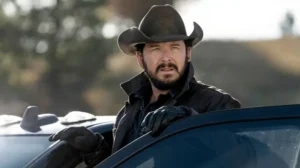
The Train Station became one of the defining elements of the Dutton family’s approach to dealing with people they considered threats. The remote location served as a place to dispose of bodies and conceal crimes that could otherwise expose the family.
Over several seasons, the location became increasingly notorious within the show’s mythology. Yet the series rarely explored the possibility that the growing number of bodies could eventually attract attention.
A discovery by a passerby, a renewed investigation or a connection between missing people and the ranch could have created a substantial legal threat for the Duttons.
Instead, the Train Station remained an effective device for moving the plot forward, with relatively little attention paid to the consequences its existence might realistically create.
11. John Dutton’s Governorship
John’s decision to run for governor promised to take the Dutton family’s struggle into a new arena. At the end of Season 4, he pursued the position partly to prevent Jamie from winning it.
After John secured the governorship in Season 5, however, the role did not become the major source of political power and conflict that viewers might have anticipated. His most notable action included halting the airport expansion associated with Market Equities, while much of his time in office involved frustration with meetings and public obligations.
The position could have allowed John to influence Montana’s political landscape in more dramatic ways, but the storyline never fully capitalized on that possibility.
Kevin Costner’s departure from the series further complicated the arc, ultimately leading to John’s death occurring offscreen rather than allowing his time as governor to reach a more developed conclusion.
12. The Protected Wolves Incident
Early in Season 5, Ryan, played by Ian Bohen, and Colby, portrayed by Denim Richards, accidentally killed two protected wolves. Rather than immediately report the incident, they joined Rip in attempting to cover it up.
The situation appeared to place the ranch under a serious legal threat. Federal authorities had reason to become suspicious after the wolves’ tracking signals stopped working near the Dutton property.
For a while, the incident seemed poised to become one of the family’s most dangerous problems. But the investigation received little further attention, and the storyline eventually faded without a clear resolution.
The wolves incident had all the ingredients for a sustained conflict involving environmental protections, federal investigators and the ranch’s increasingly risky secrets. Instead, it became another example of Yellowstone introducing a potentially consequential problem before shifting its focus elsewhere.
Ultimately, these abandoned threads illustrate one of the show’s most debated storytelling habits: introducing dramatic possibilities that do not always receive equally dramatic conclusions. Some ideas helped build atmosphere or develop individual characters, while others seemed to promise major changes to the Dutton family’s future.
For a series built around power, loyalty, land and the consequences of violence, those unresolved storylines leave plenty for viewers to revisit and debate.
Source: Compiled from various sources.