A recent clip from HBO’s The Gilded Age has drawn attention for its masterful handling of quiet but high-stakes drama. Rather than relying on overt conflict or spectacle, the scene unfolds during a dinner gathering as characters prepare to welcome a Duke—using etiquette, language, and social maneuvering as their weapons of choice.
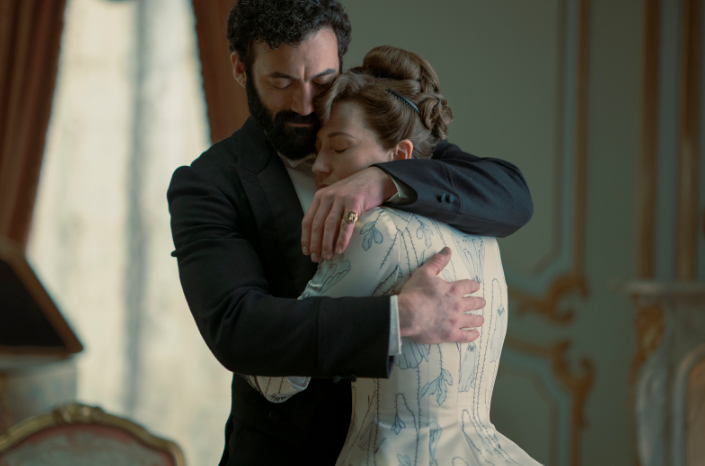
The exchange begins with a debate over the proper way to address the Duke: “Your Highness,” “Sir,” or “Your Grace.” While the question may seem trivial, within the rigid hierarchy of the Gilded Age elite, such details carry enormous weight. A single misstep could mean a devastating blow to one’s social standing. The moment captures the unrelenting pressure to adhere to codes of conduct that define—and confine—these characters’ lives.

At the center of the gathering is Bertha Russell, whose presence commands attention. In the midst of the discussion, she confirms that a stalled project has been “sorted out,” a seemingly casual remark that functions as a calculated display of control. Her composure underscores her growing influence, signaling that she is more than capable of asserting power in a world dominated by old money families.

The Duke’s eventual arrival adds another layer of intrigue. Observers note that he is “much younger” than expected—a comment that reflects the characters’ assumptions about nobility as aged and entrenched. Instead, the Duke’s youth hints at generational change and the emergence of new dynamics in the established order of society.
A seating mix-up provides the clip’s final dramatic tension. Initially framed as a subtle attempt to sideline Bertha Russell, the situation is swiftly resolved by the Duke himself. His acknowledgment that he has already heard of her through “Mr. Burns” serves as both validation and recognition of her rising status. Far from being diminished, Bertha emerges with her reputation reinforced in front of the room’s most powerful figures.
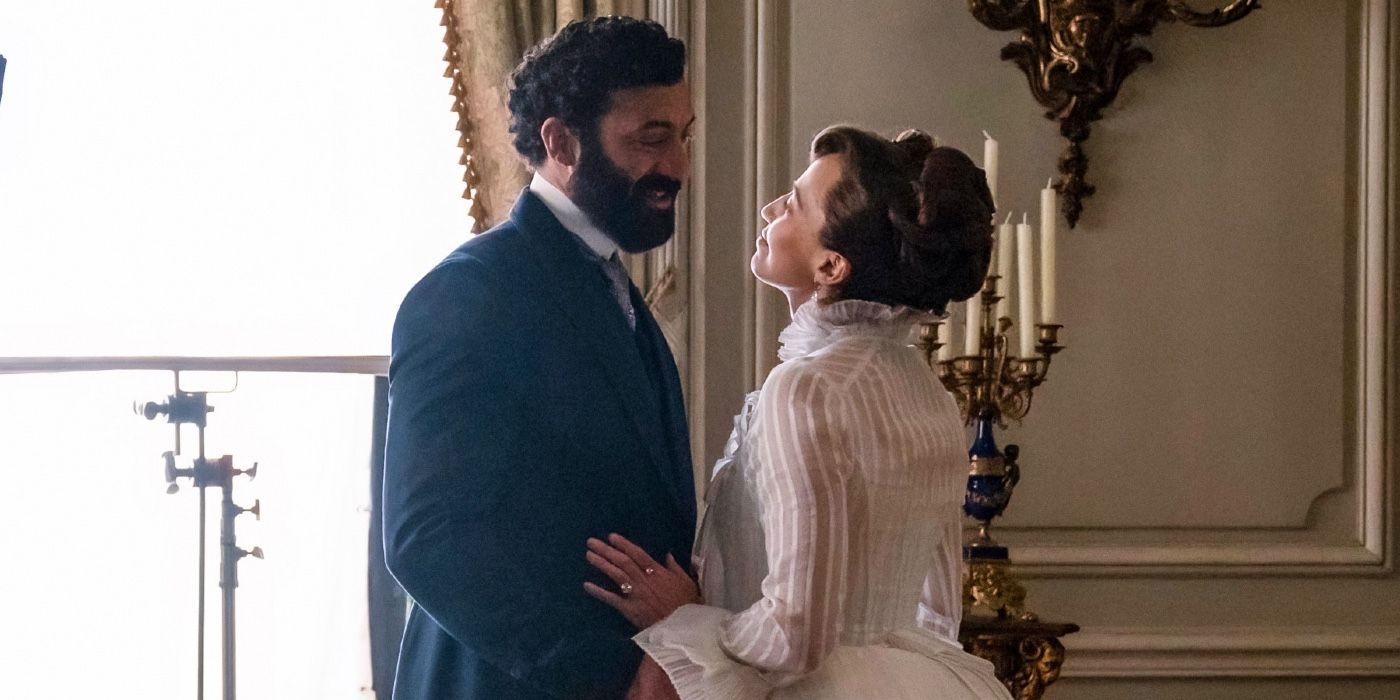
This brief scene illustrates what makes The Gilded Age compelling: the ability to turn small gestures, loaded words, and quiet exchanges into moments of profound dramatic impact. Beneath the opulent costumes and lavish settings lies a narrative focused on psychological duels, shifting power, and the constant performance of status.
With such precise writing and nuanced performances, the show continues to demonstrate that its most powerful moments often happen not in grand gestures, but in the smallest of details.