The cast of HBO’s The Gilded Age recently took part in a lighthearted yet revealing game centered on 19th-century etiquette, offering fans both laughter and insight into the rigid social codes of the era. The segment, which challenged the actors to guess whether certain rules were historically accurate, highlighted just how absurd—and telling—many of these customs truly were.

One of the standout revelations involved the ballroom, where etiquette dictated that “a gentleman should dance frequently and not just wait for supper.” While humorous to modern audiences, this rule underscores the reality that every social event in the Gilded Age was a public performance. Appearances were everything, and even a refusal to participate fully in a dance could damage one’s social standing. The cast’s amused reactions reflected an understanding that life in that period was less about personal freedom and more about maintaining a constant façade.

At the dinner table, the rules became equally striking. The notion that one should never hesitate to take the last piece of cake or bread, for example, served as more than a quirky formality—it was a subtle display of confidence and authority. Similarly, the etiquette of discreetly placing unwanted food under the plate, which drew laughter from the actors, symbolized the very heart of the Gilded Age: unpleasant truths were hidden away in order to maintain a polished exterior.
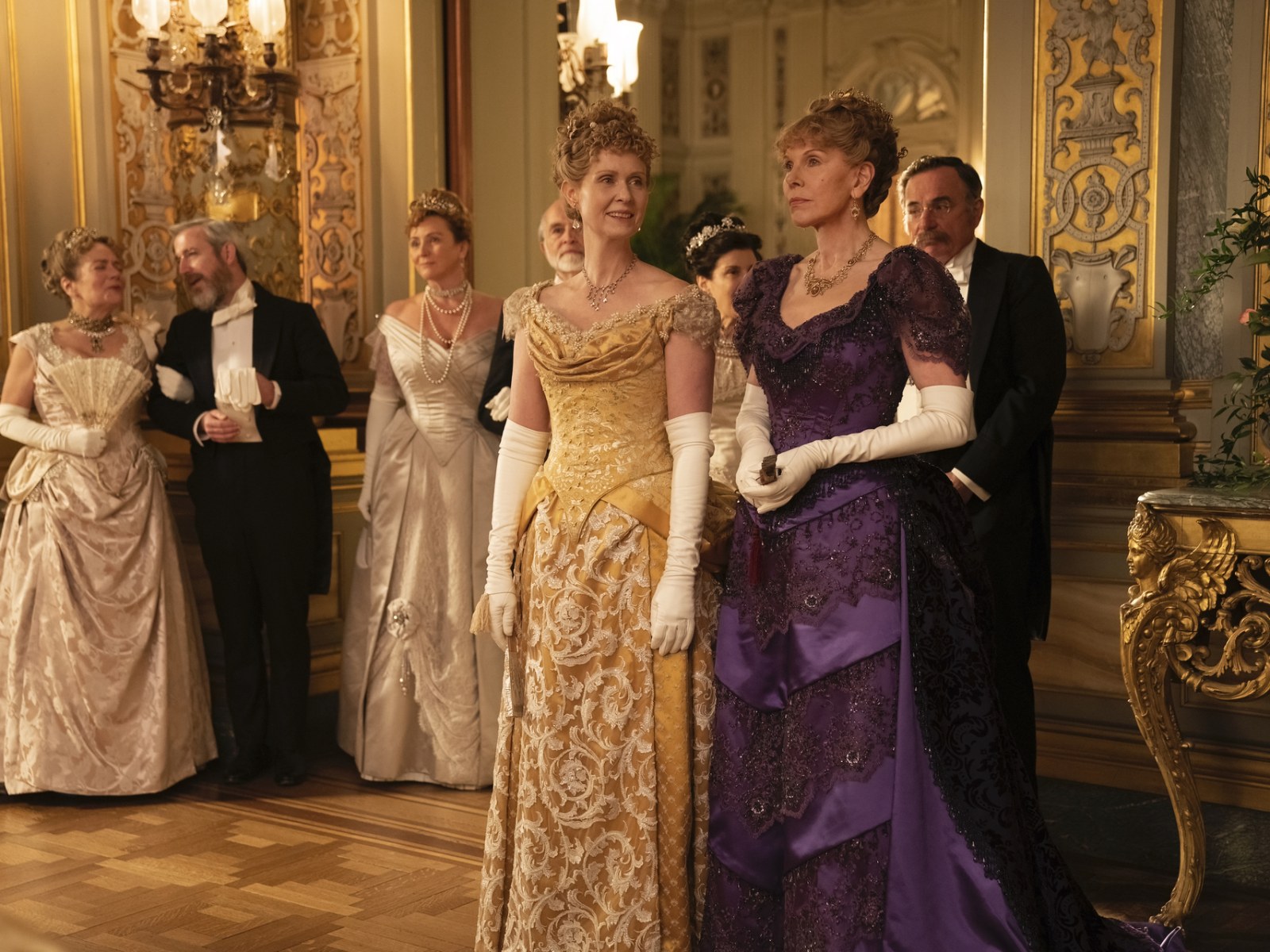
The rules surrounding courtship sparked some of the most animated responses. In particular, the practice of a lady “accidentally” leaving behind a personal belonging at a suitor’s home was revealed to be a genuine custom. While playful to the modern eye, the tradition reflected the repressed and highly coded communication of romance during the time. Direct expressions of affection were rarely acceptable; instead, courtship relied on subtle gestures, carefully orchestrated mistakes, and implied meanings.

Perhaps the most striking rule addressed in the game was the prohibition against bringing gifts to households of lower social standing. Far from an act of politeness, gift-giving was interpreted as a marker of equality—a breach of the rigid social hierarchy that governed the Gilded Age. This detail, more than any other, revealed how etiquette functioned not only as a guide to manners but as a system designed to preserve class divisions.
What makes the segment particularly engaging is how the cast balances humor with genuine appreciation for the complexities of the period. By examining these rules, the actors highlight that The Gilded Age is not merely a series about grand houses and elegant costumes. It is also a study of the psychological pressures and silent struggles of a society bound by appearances and hierarchies.
The video serves as both comic relief and a thoughtful reminder of how closely The Gilded Age engages with history. For fans, it is a chance to see the cast reflect on their characters’ world with both wit and insight—while reaffirming why the series continues to resonate as a sharp exploration of power, class, and human behavior hidden beneath layers of etiquette.