t is a very existential idea to me. It’s about the illusion of love. They keep wanting to go back to something they really didn’t understand to begin with, when they are inside of it. They never get it. And when they get it, they’ve missed it.
—Ang Lee

In October 1997, Pulitzer Prize winner Annie Proulx had her short story entitled Brokeback Mountain published in The New Yorker. The following year saw the author win both a third place Henry O. Award and the National Magazine Award for her deeply tragic and poignant tale of a love between two cowboys that blossoms in 1963 Wyoming and ends up spanning two decades. The idea crept up on her after she witnessed an elderly cowboy wearing a peculiar expression of longing and sadness on his face as he watched several young men playing pool in a bar in Sheridan. This made Proulx wonder whether he was gay and what it would be like to be an old homosexual cowboy living in a place where not complying to the standards of heteronormativity was nothing short of life-endangering. Her curiosity resulted in a writing process that lasted around six months, a period during which she penned more than sixty drafts of the story and renamed it several times (Drinkard Mountain, The Pleasures of Whiskey Mountain, Swill-Swallow Mountain etc.). In a 2005 Advocate interview, the writer spoke candidly about why the crafting of this particular short story took longer than finishing a novel: “Because I had to imagine my way into the minds of two uneducated, rough-spoken, uninformed young men, and that takes some doing if you happen to be an elderly female person. I spent a great deal of time thinking about each character and the balance of the story, working it out, trying to do it in a fair kind of way.” Knowing very well that the subject matter she decided to tackle was a controversial one at best, Proulx never thought that Brokeback Mountain would see the light of day, let alone be adapted into a hugely successful, culturally significant, groundbreaking motion picture eight years later.
A mere few days after the story was published in The New Yorker, and a year and a half before a somewhat expanded version was included in Proulx’ collection of short stories called Close Range: Wyoming Stories, author and screenwriter Diana Ossana read it and emerged from the experience profoundly moved. Having immersed herself in the story a second time the following day, she contacted her longtime collaborator and Pulitzer Prize-winning author Larry McMurtry, who she had been writing with since 1992. Wishing he had authored the story himself, McMurtry proclaimed it a masterpiece and Ossana wrote to Proulx, informing her of the pair’s shared desire to turn Brokeback Mountain into a screenplay. Proulx gave them the green light, despite not being able to imagine a cinematic version of her work, and the two writing partners optioned the story with their own money, something they had never done before. But even though the screenplay was finished before 1997 came to a close, making the film happen was no walk in the park. Director Gus Van Sant was the first to show interest and allegedly wanted Matt Damon and Joaquin Phoenix to star in the adaptation. But in 2018, Phoenix set the record straight, saying he would have done the film in a heartbeat had it been offered to him, adding how honored he felt “that people would think that I was worthy enough to be in it.” Other Hollywood A-listers such as Leonardo DiCaprio, Ryan Philippe, Brad Pitt and Josh Hartnett declined the lead roles, prompting Van Sant to move on to other projects. McMurtry was convinced agents were advising their actors against saying ‘yes’ to Brokeback by claiming that a straight actor taking on a gay role would be career suicide.

In 2001, CEO of Focus Features James Schamus bought the movie rights, but was well aware of the risk involved, telling the Huffington Post: “Honestly, it was a bit of a laughing stock. You know, the gay cowboy movie.” According to Ossana, people in the industry praised the script, but no one was ready to be in it for the long haul due to the film’s perceived controversial theme. In 2002, Ossana urged Schamus to show the screenplay to director Ang Lee who the producer had already collaborated with on several films. Lee was taken with both the short story and the script but he and Schamus decided to do The Hulk instead: “I was pretty wrecked by making Crouching Tiger, Hidden Dragon. My friend Jim [Schamus] introduced me to this little story by Annie Proulx, and towards the end when they talk about all they’ve got is Brokeback Mountain, that was an existential question to me. What is this Brokeback Mountain? They say, “We don’t really have a relationship, it’s just Brokeback Mountain,” and I cried there. That really perplexed me. I grew up in Taiwan, so nothing is more remote to me than gay cowboys in Wyoming. At the time, I was in the flow of doing something pulpy and picked to do The Hulk, which wracked me even more. But the story just refused to leave me.”
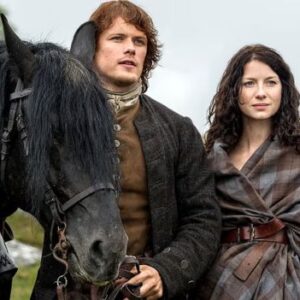
His father’s death and the exhaustion brought on by both Crouching Tiger, Hidden Dragon and The Hulk made Lee contemplate retirement. But he did not want a film centered around anger to be his swan song. Seeing as how he thought the story that “just refused to leave” him had, in the meantime, been turned into a feature film, the filmmaker asked Schamus what had become of it. Upon finding out that the movie had still not been made, Lee did not waste time hesitating. With River Road Entertainment and Focus Features financing Brokeback Mountain and Lee sitting in the director’s chair, the search for the perfect cast could continue. In 2003, Ossana’s daughter suggested the late Heath Ledger, so the screenwriters watched Marc Forster’s 2001 drama Monster’s Ball and knew they wanted the Australian actor for the part of Ennis Del Mar, the more silent and closed off of the two cowboys. But the studio was not convinced, claiming that the then 24-year-old actor lacked masculinity. Lucky for him, another actor who had been attached to the projected backed down and Ledger was sent the script. Deeming it the most beautiful screenplay he had ever read, he was all in, more than willing to portray a character of such subtlety and complexity.
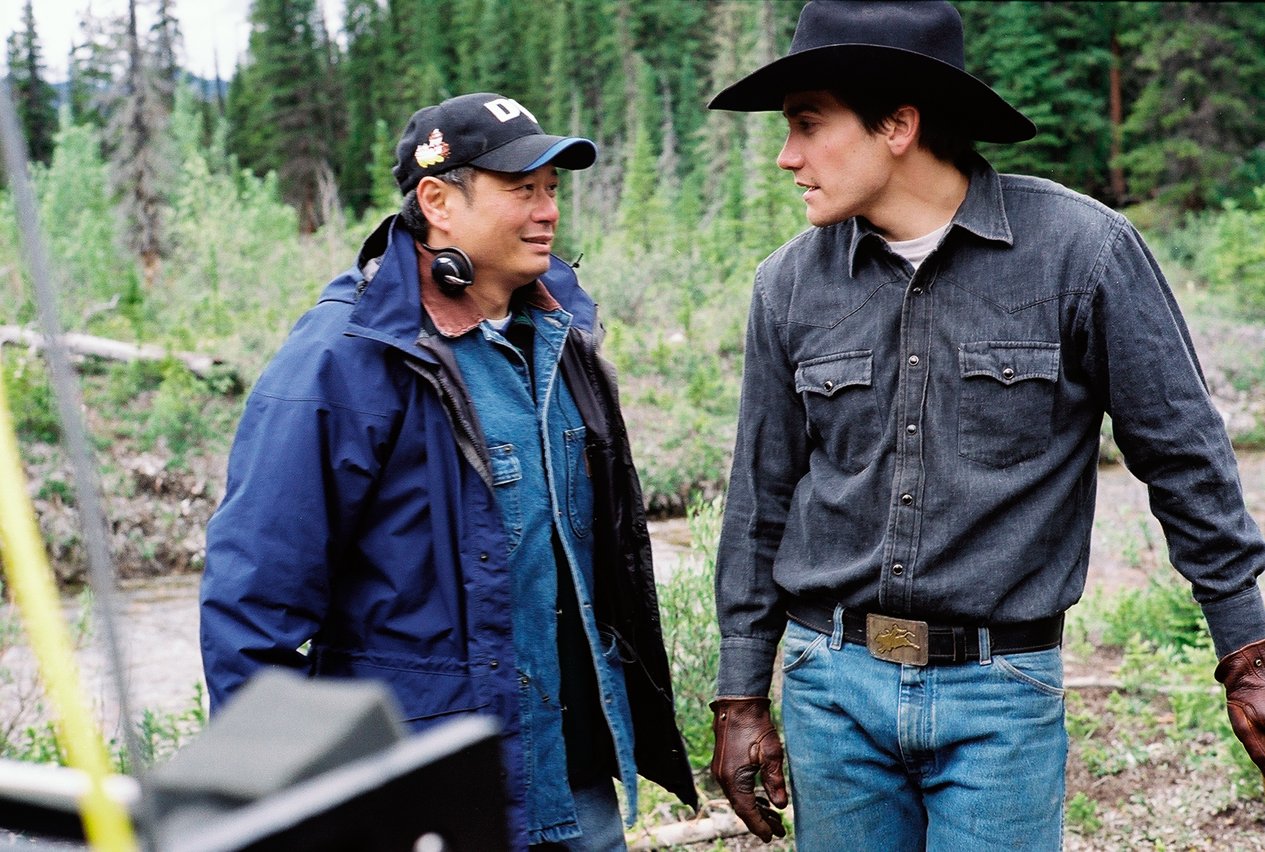
Jake Gyllenhaal accepted the second lead role, that of Jack Twist, eager to work with Lee and his friend Ledger, who he bonded with after neither of them got cast opposite Nicole Kidman in Baz Luhrmann’s 2001 musical Moulin Rouge! Anne Hathaway auditioned for the part of Jack’s spouse Lureen while filming The Princess Diaries 2: Royal Engagement and since she was on lunch break, the actress was still wearing an over-the-top hairpiece and a gown, but that did not distract her from focusing on her objective—securing the part of Lureen and finally being seen as something other than a Disney princess. She also lied about knowing how to ride a horse: “My parents have given me a lot of gifts in my life, and one of them is: If you’re ever asked if you can do anything, say yes. You can learn anything in two weeks if you’re motivated enough.” The role of Ennis’ wife Alma went to Michelle Williams, who Ossana had spotted on the teen show Dawson’s Creek (1998-2003), immediately recognizing the actress’ emotional depths. The four actors formed a close bond during the film’s production, which should come as no surprise given the fact that they spent months shooting in Alberta, Canada, living in trailers by a river. Ledger and Williams even fell in love and had a daughter, with Gyllenhaal becoming the child’s godfather.
In its very first scene that starts off with a breathtakingly beautiful scenery shot accompanied by Gustavo Santaolalla’s simple, yet deeply evocative opening composition, Lee effortlessly establishes the tone and tempo of the one film that nurtured him “back to filmmaking and as a person.” Slow-paced, deliberate and without a single superfluous scene, shot or line of dialogue, Brokeback Mountain wastes no time introducing us to Ennis and Jack, but then takes all the time in the world to flesh them out as humans, in ways both raw and refined. In the summer of 1963, the two nineteen-year-old ranch boys get the job of herding sheep on Brokeback Mountain in Wyoming. Lee does not spare us the details that go into the logistics of the gig, deliberately taking us through its mundanities and repetitiveness, so as to gradually and realistically construct the shared microcosm that Ennis and Jack agree to co-inhabit until summer’s end. But Brokeback, in all of its magnificence and might, does not care much for the plans of men. Every once in a while, the two co-workers are faced with challenges that mother nature places before them, such as wild animals, storms and blizzards. As it turns out, snow in the middle of August is not the only force of nature that takes them by surprise, leaving them dazed, confused and torn—after a night of intense whiskey drinking, the two end up sleeping in the same tent and having sex. The following morning, in a manner both terse and detached, they deny being queer and come to an understanding that the one-time thing they got going “ain’t nobody’s business” but theirs.

While Gyllenhaal’s Jack is extroverted and more prone to talking, Ledger’s Ennis is a man of few words, his lips sealed tight, his thoughts and feelings barely reaching the surface, fighting for their right to remain hidden and unexpressed. For he had learned that expression meant exposure, and exposure led to death. As a child, Ennis became severely traumatized when his father showed him the mutilated corpse of a gay man. It was in that moment that the boy’s entire system shut down and proceeded to keep him alive the only way it knew how—by receding, retracting, contracting and vanishing. By remaining unnoticed. By denying, disowning and repressing everything that would render him vulnerable and thus endanger his existence. Such as having feelings for another man. But when those feelings do inevitably develop and emerge, what enables Ennis to give into them is the safe embrace of Brokeback Mountain, arguably a character in its own right, an unjudgmental entity that allows for freedom of expression without repercussions. “Old Brokeback got us good, don’t it,” whispers Jack into Ennis’ ear four years later, during the pair’s first post-Brokeback rendezvous. After finishing their summer job, the two go their separate ways, get married and have children. The decision to see each other again becomes a choice point that results in them meeting up on Brokeback once or twice a year for the next two decades.
There is nothing melodramatic or boisterous about the way that Lee, Ledger and Gyllenhaal depict the tragic love story between two men born and raised in the American West, where the moving parts that make up the cowboy myth rely heavily on sexism, homophobia and toxic masculinity. Brokeback Mountain challenges that myth by presenting us with real people and the struggles they face when the Marlboro man archetype they have been indoctrinated into is met with an oppositional force. And that oppositional force is the unique life current that runs through their core, carrying with it the truth of who they truly are, what they truly want and how they truly feel as sensitive and inherently free human beings. This tug-of-war is both external and internal, raging inside the main characters (most notably Ennis) and disabling them from creating a life for themselves on their own terms—because doing so has the potential of ending fatally. And while Jack’s current manages to spill through the cracks and boldly lead the way to a more authentic life, Ennis remains stuck in a state of freeze—unable to move, unwilling to initiate, afraid to express. “If you can’t fix it, you gotta stand it,” he tells Jack, unknowingly describing the prevailing state of his nervous system, one that has learned to endure, as opposed to (embrace) change. Ultimately, the li(v)es they choose to live due to the very real trauma caused by (internalized) homophobia end up affecting not only them as individuals and the future of their relationship, but also their families. We are meant to feel for Jack and Ennis just as much as we are intended to sympathize with their wives. There are no winners in this constellation—only emotionally neglected people doing the best they can with the tools, resources and levels of (self-)awareness they’ve got. And that ain’t much.
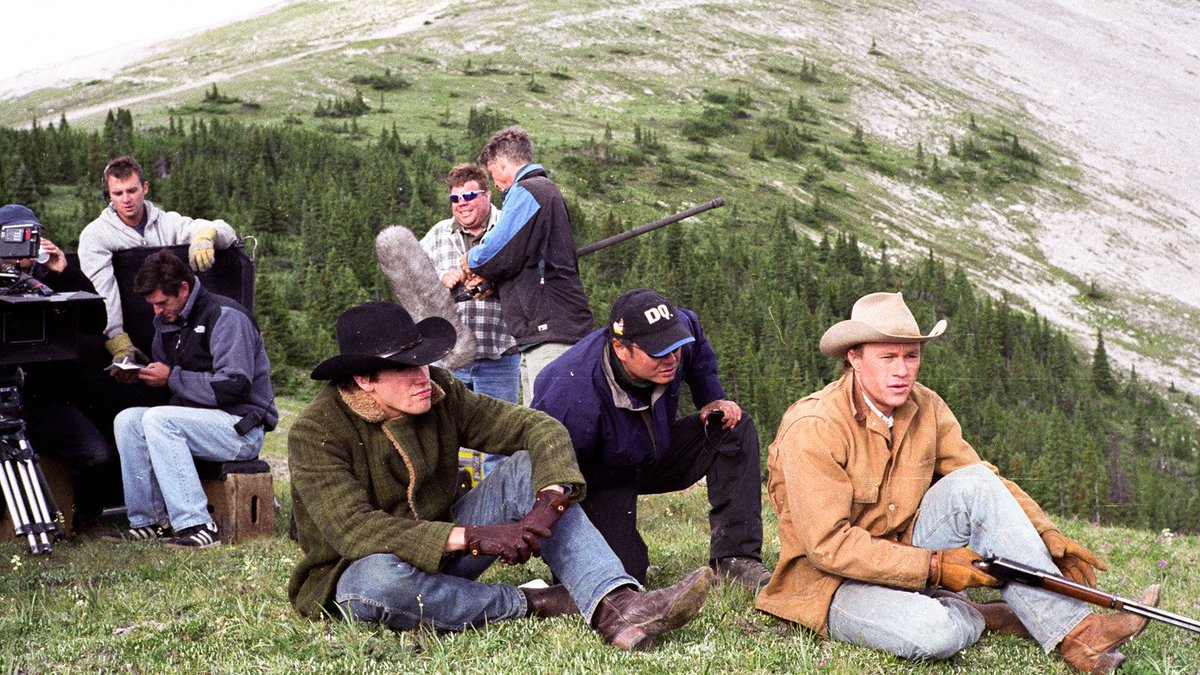
The deep-seated loneliness they all feel permeates Lee’s beautifully shot film, his direction managing to be highly unobtrusive, yet touchingly poetic. Every shot is infused with a stillness that has the potential to either run deep like still waters or erupt like a volcano. He enjoys making us hear the sound of silence—sometimes rife with tranquility, at other times bursting with tension born out of all the words left unspoken. He wants to submerge us in the monotony of the characters’ day-to-day and then juxtapose it with their scarce meet-ups that end up being the highlights of their unfulfilled lives. The years that go by seamlessly blend into one another and by the end of the film, we feel as if we had aged alongside Ennis and Jack. Their stuckness becomes our stuckness, their pain our pain, their weariness our frustration. Brokeback Mountain is not a film that sizzles and pops, but one that smolders with the kind of slow-burning despair that gradually nests itself inside our being before chewing us up, spitting us out and leaving us exhausted, broken and gasping for air on the side of the proverbial (dirt) road.
Upon finally hitting theaters in 2005, the film meticulously reflected how far we had (not) come as a society in terms of accepting otherness in the form of queerness. On the one hand, critics recognized Brokeback Mountain’s artistic and cultural value, praising it to high heaven. Lee’s well-thought-out masterpiece went on to dominate the award season with a total of one hundred thirty-seven nominations and eighty-five wins, including eight Academy Award nods and three victories (Best Director, Best Adapted Screenplay, Best Original Score). It made $178.1 million worldwide, on a $14 million budget. Proulx herself claimed that she “may be the first writer in America to have a piece of writing make its way to the screen whole and entire.” Ledger, Gyllenhaal, Williams and Hathaway all received huge acclaim, with everyone except Hathaway getting their first Oscar nomination. On the other hand, audiences were quite understandably divided. Because although much more graphic queer films had existed for decades, Brokeback Mountain broke new ground by finding its way into the mainstream like no other queer movie before it, thereby providing a majority of straight viewers with a reference point for LGBTIQ+ cinema.
But there were those who neither wanted nor were ready for queer representation to enter the mainstream to begin with. And so, Brokeback Mountain became like a beacon that beckoned the homophobia ingrained in the very fabric of our society to rear its ugly head. I remember being seventeen and watching the movie a total of eleven times while it was playing in theaters, desperately wanting to peel back another layer of the proverbial onion with each viewing. And not a single one went by without someone pompously walking out in protest or shouting homophobic slurs at either the screen or the moviegoers themselves. American right-wing commentators regularly slammed the film for promoting “the gay agenda.” Iconic scenes and lines became the butt of many jokes in various media outlets. And the Academy showcased its hypocrisy by giving the Best Picture Award to Paul Haggis’ relatively forgettable drama Crash, making it one of the biggest snubs in Oscar history.
Brokeback Mountain undoubtedly paved the way for its cinematic successors. It was made at a point in time when gay actors remained closeted out of fear of losing their livelihood, while straight actors were hesitant to play gay roles for the exact same reason. Today, the latter is yet again the case, but the reasoning behind it is different due to the pendulum having swung in the opposite direction. Therefore, Lee’s film cannot be separated from the zeitgeist that birthed it, just like the story itself can be neither analyzed nor understood outside the spatial and temporal context of 1960s Wyoming. But if we do decide to strip away all the layers of context, what we are inevitably left with is a uniquely specific tale that manages to transcend its specificity, thus revealing itself to be incredibly universal. When the end credits rolled on my very first viewing in February 2006, I wiped away my tears and made my way towards the exit. At that moment, I heard a man behind me telling his friend in both disbelief and amazement: “But… I mean… they actually loved each other!,” as if it were the first time in his life he dared to entertain one such possibility. It was then and there that I knew. Not only why Brokeback Mountain had to be made, but also just how game-changing and consciousness-expanding it would become. Love and loss—you cannot get more universal than that.